3C & Semiconductors
?
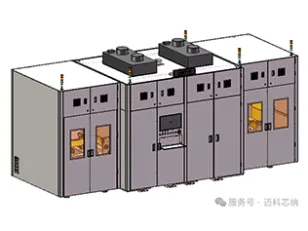
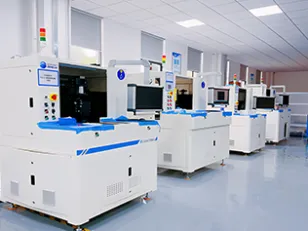
As a 3C and Semiconductor Laser Processing Equipment Manufacturer, Microtreat provides precision laser systems for advanced electronics, semiconductor-related materials, glass processing, wafer handling, and thin-film component manufacturing. This product series can be understood as an extended type of Laser Scribing Machine, not limited to simple cutting, but covering laser scribing, drilling, marking, dicing, debonding, edge processing, and repair applications.
For 3C electronics and semiconductor manufacturing, processing accuracy, thermal control, material compatibility, and repeatability are critical. This equipment series is designed for manufacturers, laboratories, and process developers that need clean, controlled, and non-contact laser processing for fragile, thin, or high-value materials.

Applications in 3C and Semiconductor Industries
- Film cutting for optical films, display films, protective films, adhesive layers, and flexible electronic materials.
- PCB laser cutting for fine electronic circuits, flexible PCBs, and precision board processing.
- Green glass drilling for glass substrates used in display, electronics, and advanced component manufacturing.
- Stealth dicing for wafer or brittle material separation where edge quality and crack control are important.
- Laser wafer marking for traceability, identification, and process control in semiconductor production.
- Debonding equipment for separating temporary bonded materials in semiconductor or advanced packaging processes.
- TGV laser drilling for through-glass via processing in glass-based semiconductor packaging or interconnect applications.
- Laser glass cutting for display glass, functional glass, and precision glass components.
- Electrochromic glass laser repair, marking, and edging for smart glass and functional glass manufacturing.
?
Problems in Traditional Processing & Corresponding Solutions
- Problem: Mechanical cutting may cause burrs, cracks, edge chipping, or deformation when processing thin films, glass, wafers, and flexible substrates.
Solution: Microtreat uses non-contact laser processing to reduce mechanical stress on the material surface, helping achieve cleaner edges and more stable processing quality.
- Problem: Manual or semi-manual processing can lead to inconsistent results, especially for fine patterns, complex cutting paths, and fragile materials.
Solution: The equipment can be configured with vision positioning, motion control, and software-based process recipes to improve repeatability from sample testing to batch production.
- Problem: Tool-based cutting, drilling, or engraving requires frequent replacement of blades, drills, or fixtures, which increases downtime and maintenance costs.
Solution: Laser processing reduces dependence on consumable cutting tools, helping manufacturers lower tool wear, reduce maintenance frequency, and improve production continuity.
- Problem: Conventional drilling or cutting may generate excessive stress on brittle materials such as glass, wafers, and advanced semiconductor substrates.
Solution: Precision laser drilling, cutting, and scribing can process brittle materials with controlled energy input, reducing the risk of cracks and improving edge or hole quality.
- Problem: Contact-based processing may contaminate clean materials or damage sensitive surfaces used in 3C electronics and semiconductor production.
Solution: Non-contact laser processing helps protect sensitive surfaces and supports cleaner processing conditions for high-value electronic and semiconductor-related components.
- Problem: Different materials, thicknesses, and processing purposes often require different processing parameters, making one standard machine difficult to use across multiple applications.
Solution: Microtreat can provide customized optical systems, laser sources, working areas, fixtures, and software functions according to the material type and production requirement.
- Problem: Traditional processing methods may struggle with micro-scale features, high-precision positioning, and complex processing patterns.
Solution: The equipment supports precision laser scribing, cutting, drilling, marking, dicing, debonding, and repair processes, helping manufacturers handle more detailed and complex processing tasks.
- Problem: Unstable processing quality can affect product yield, especially in wafer marking, TGV drilling, glass cutting, PCB processing, and film cutting applications.
Solution: Recipe management, precise motion control, and laser parameter adjustment help improve process stability and reduce quality variation between batches.
?
?
Learn More +
Learn Less -