
Laser technology plays a key role in the manufacture of thin-film solar cells, especially for high-precision processing of perovskite cells. Through the four core processes from P1 to P4 (etching the conductive layer, dividing the battery unit, removing edge defects, etc.), the laser achieves micron-level scratching in a non-contact manner, reducing material damage and improving component efficiency. Ultrashort pulse (picosecond/femtosecond) laser technology can accurately control energy to avoid thermal effects from damaging perovskite films, and the dead zone width is reduced to less than 150 microns, increasing the effective power generation area by 2%-4%. At present, laser equipment has become the core equipment of perovskite mass production lines, supporting high-speed processing of large-size substrates (above 1m2), and promoting the photovoltaic industry to accelerate development in the direction of high efficiency and low cost.
?
1. Core process: P1-P4 laser processing
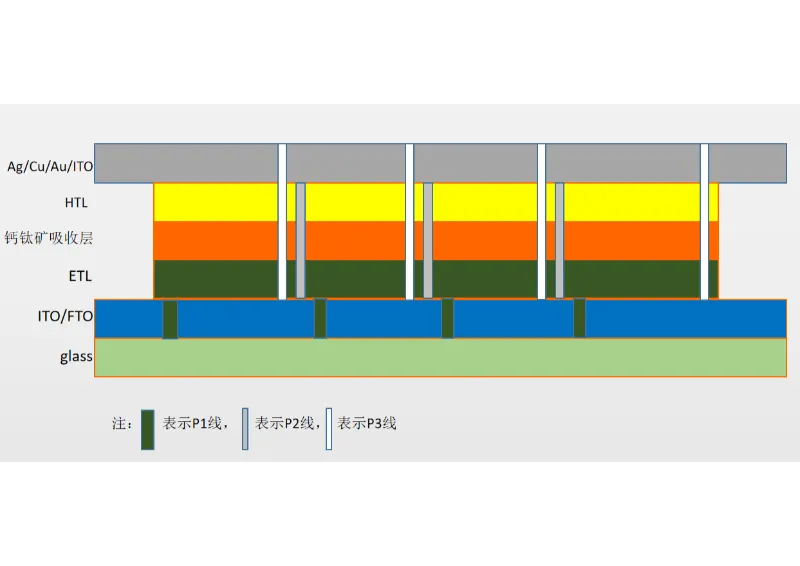
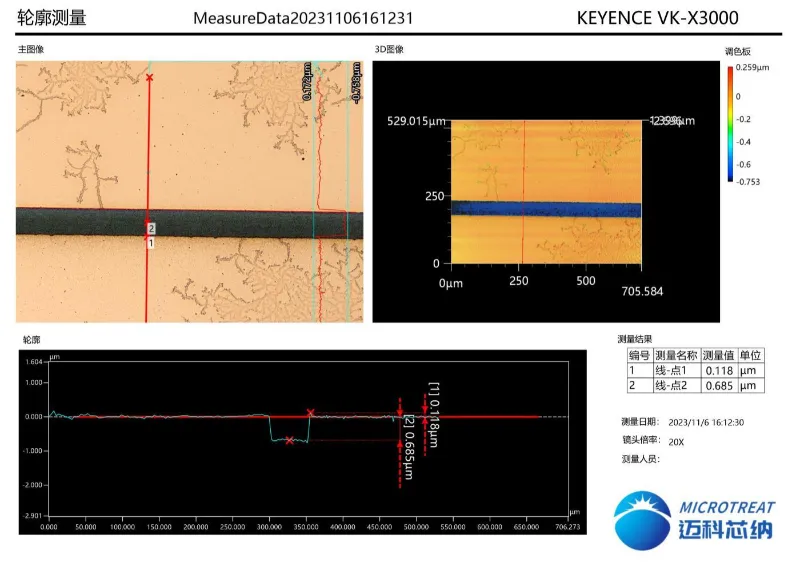
The preparation of perovskite cells requires four laser processes, including three film etchings (P1-P3) and one edge cleaning (P4) to achieve the segmentation and series connection of battery cells, reduce resistance loss and improve component efficiency.
- P1 scribing: Etching the bottom transparent conductive oxide (TCO) layer to form an independent substrate;
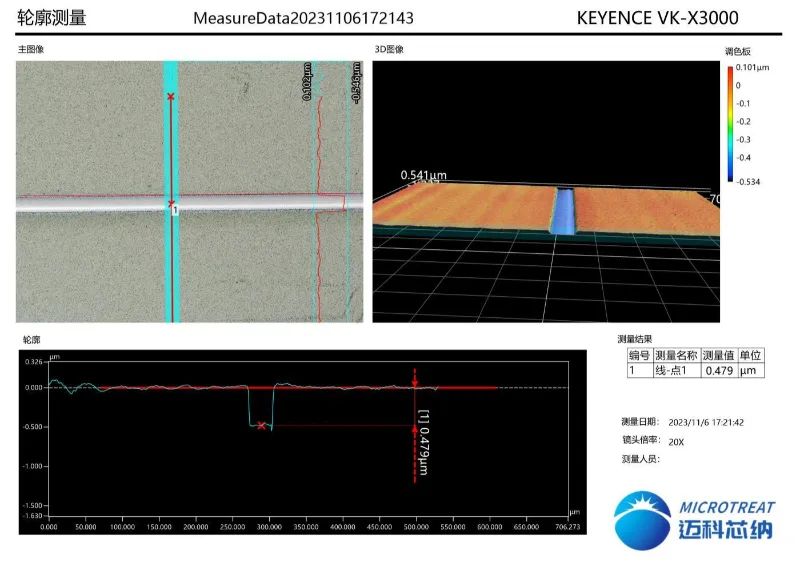
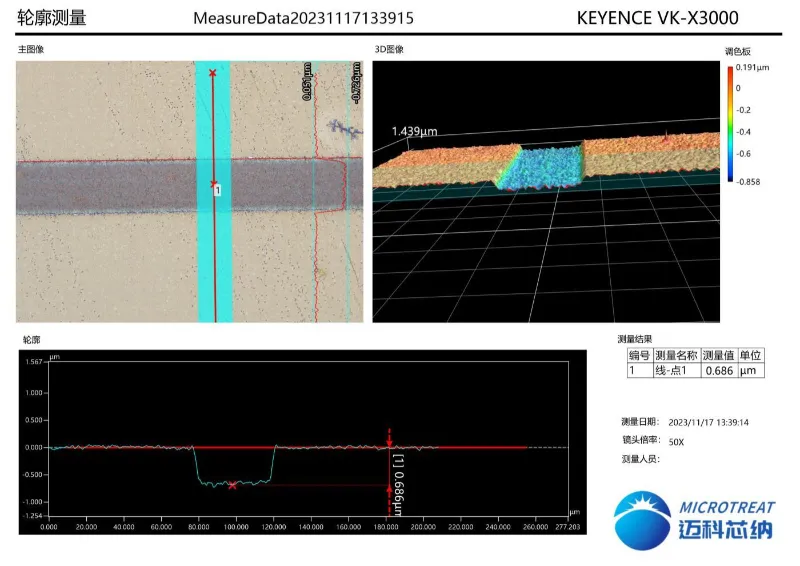
- P2/P3 scribing: Opening the electrode transmission channel and isolating the sub-cells, the etching depth must be precisely controlled to avoid damaging the underlying structure;
- P4 edge cleaning: Clearing the edge film layer to prevent leakage and improve packaging reliability.
The non-contact processing characteristics of the laser avoid the problems of edge collapse and debris in mechanical scribing, and the dead zone width can be controlled at the micron level, significantly increasing the effective power generation area.
?
2. Advantages of ultrashort pulse laser technology
Traditional nanosecond lasers are prone to material damage due to thermal effects, while picosecond/femtosecond lasers achieve "cold processing" with ultrashort pulses (picosecond level) and high peak power, reduce heat-affected zones, and make etching edges smoother, especially suitable for high-precision processing of perovskite films (thickness is only micrometers).
?
3. Customized equipment development
In response to the industrialization needs of perovskites, the company has launched a full range of solutions from laboratories to mass production lines. For example, the 100-megawatt pilot equipment supports multi-path beam splitting and parallel processing, with a processing speed of 1.5m/s and an accuracy of ±10μm, which meets the efficient production of large-area substrates.
previous:
None
next:
Request a Quote
Request a Quote
Navigation
Navigation
Contact Us
Contact Us
E-mail: mkxn@szmicrotreat.com
Tel.: +86 512 8391 9217
Tel.: +86 173 1528 3532
Tel.: +86 188 6210 4169
WhatsApp: +8618015504961
Add.: Unit 101, Building 63, Suzhou Nano City, No. 99 Jinji Lake Avenue, Suzhou Industrial Park, Suzhou