Sep. 10, 2025
When it comes to optimizing the production of perovskite solar cells, one critical decision manufacturers face is selecting the right laser scribing system. With advancements in laser technology, nanosecond and picosecond lasers offer distinct benefits that can directly affect efficiency and production quality. Common questions from users include: "Which laser provides better precision?" and "How do the operational costs compare?" These inquiries highlight the pain points of production companies—specifically, the need for high precision without sacrificing cost-effectiveness.
| Feature | Nanosecond Laser | Picosecond Laser |
|---|---|---|
| Pulse Duration | 5-10 ns | 1-10 ps |
| Peak Power | Up to 1 MW | Over 10 MW |
| Material Ablation Rate | Moderate | High (38% faster) |
| Cost | Lower Initial Investment | Higher Initial Investment |
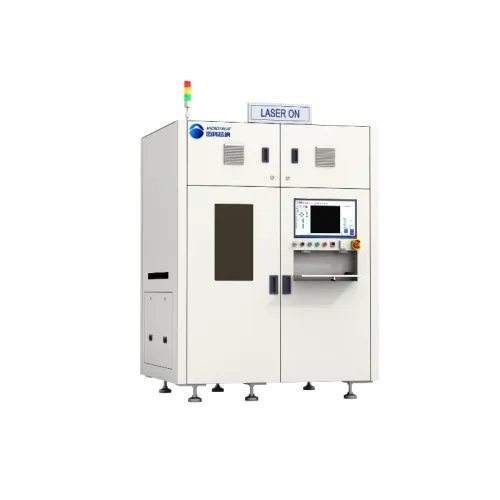
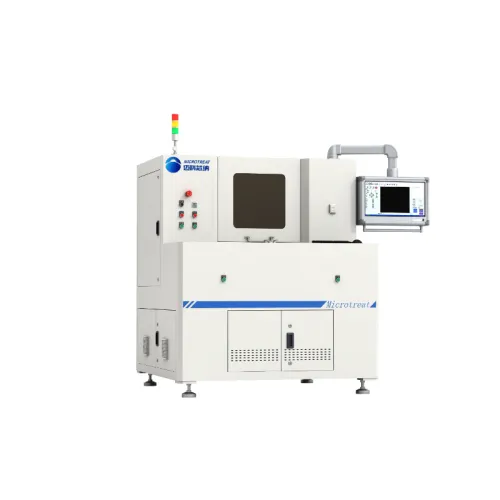
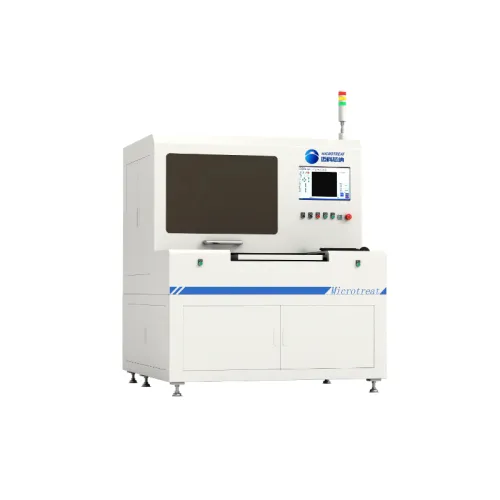
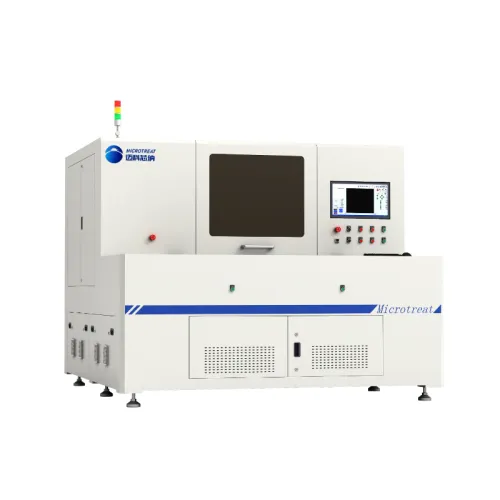
The production of perovskite solar cells involves intricate scribing processes that directly affect the final product's performance, whether you're dealing with a compact panel or a larger array. In scenarios where precision is paramount, picosecond lasers, like those offered by Microtreat, produce more refined scribing with reduced heat-affected zones, minimizing material degradation. Contrarily, if budget constraints are significant and you need satisfactory quality, nanosecond lasers may suffice while optimizing initial costs.
Consider a real-world case with a startup manufacturing perovskite solar cells that initially opted for a nanosecond laser system due to its lower price point. While the initial investment was appealing, the quality of the scribing led to flaws in their product, resulting in a 15% lower efficiency compared to industry standards. After analyzing their production line, they transitioned to a picosecond laser solution that increased both efficiency and yield to 92% after the first quarter of use.
Feedback from end-users sheds light on real-world applications. A company that integrated Microtreat’s picosecond lasers reported an increase in productivity by 25% within the first month, owing to faster operational speeds and enhanced accuracy. Conversely, users who maintained nanosecond laser systems noted common complaints about blistering and thermal damage incurred during production.
When deciding between these two systems, consider an unbiased approach by evaluating necessary factors such as application requirements, cost, and production goals. For instance, if your operational model is based on high-volume production with minimal defects, investing in a picosecond laser might be justified despite the upfront cost. Conversely, if you operate in a cost-sensitive environment with lower production rates and are still within acceptable efficiency levels, a nanosecond laser could be adequate. For example, an electronics firm that produces individual solar panels with lower tolerances benefited significantly from upgrading to a picosecond laser, which reduced defects from 11% to just 3%.
In conclusion, the choice between nanosecond and picosecond laser systems ultimately depends on specific production needs. Manufacturers requiring maximum precision with a budget that allows for higher initial investments should consider picosecond lasers. On the other hand, companies looking for cost-effective solutions, operating at lower production rates, may find nanosecond systems to be more suitable for their operations.
Next Steps: To delve deeper into our product solutions, consider viewing product details, scheduling a free trial, or booking a demo to witness the Microtreat advantage in action.
Related Products
Request a Quote
Request a Quote
Navigation
Navigation
Contact Us
Contact Us
E-mail: mkxn@szmicrotreat.com
Tel.: +86 512 8391 9217
Tel.: +86 173 1528 3532
Tel.: +86 188 6210 4169
WhatsApp: +8618015504961
Add.: Unit 101, Building 63, Suzhou Nano City, No. 99 Jinji Lake Avenue, Suzhou Industrial Park, Suzhou